

by Ben Donaldson, Certified IFS Therapist
(estimated reading time: 9 minutes)
You're tired.
You wake up tired. You move through the day tired. You go to bed tired, sometimes dreading the fact that you'll have to do it all again tomorrow.
Even a good night's sleep or a quiet weekend doesn't make it go away. This is something different — a weariness that settles in and stays. You may have already cycled through the usual explanations: not enough sleep, too much stress, too little exercise. You may have tried some of the fixes. And you may have noticed that even when you address those things, something underneath remains unchanged. But just what exactly is it underneath that never seems to go away?
Always Tired
Exhaustion has become so normalised in contemporary life that it is easy to mistake it for simply how adult life feels. Many people describe themselves not as burning out, but as "just busy" or "probably not managing their time well enough." The tiredness becomes invisible precisely because it is so constant.
This quality of fatigue is often less about physiological depletion and more about the enormous sustained effort of managing an inner system under pressure. The chronic tiredness is not imaginary, and it is not simply a failure of self-care. It is often your system's way of signalling that something is wrong at a structural level.
The System Behind the Symptoms
To understand why inner conflict produces exhaustion, it helps to look at how the internal system is organised. Psychotherapeutic modality Internal Family Systems (IFS) describes two broad categories of psycho-emotional roles that we fall into: managers and firefighters. Both working at tremendous ongoing cost.
"Managers are commonly your system's homeostatic mechanisms. Whenever your behavior or inner experience strays from what they believe is safe for you, they act to bring you back."
— Richard Schwartz, No Bad Parts
The word "homeostatic" is worth sitting with. These roles are not for doing a single job and resting. They are continuously monitoring — scanning for deviation from what they have defined as safe, and continuously correcting. This effort does not stop when you clock off. It runs in the background of every interaction, every conversation, every moment of relative quiet when the mind might otherwise settle.
What Managers Are Actually Doing
Manager parts are proactive protectors. They work in advance of potential threat, organising behaviour, suppressing emotion, maintaining standards, and keeping the inner and outer presentation under control.
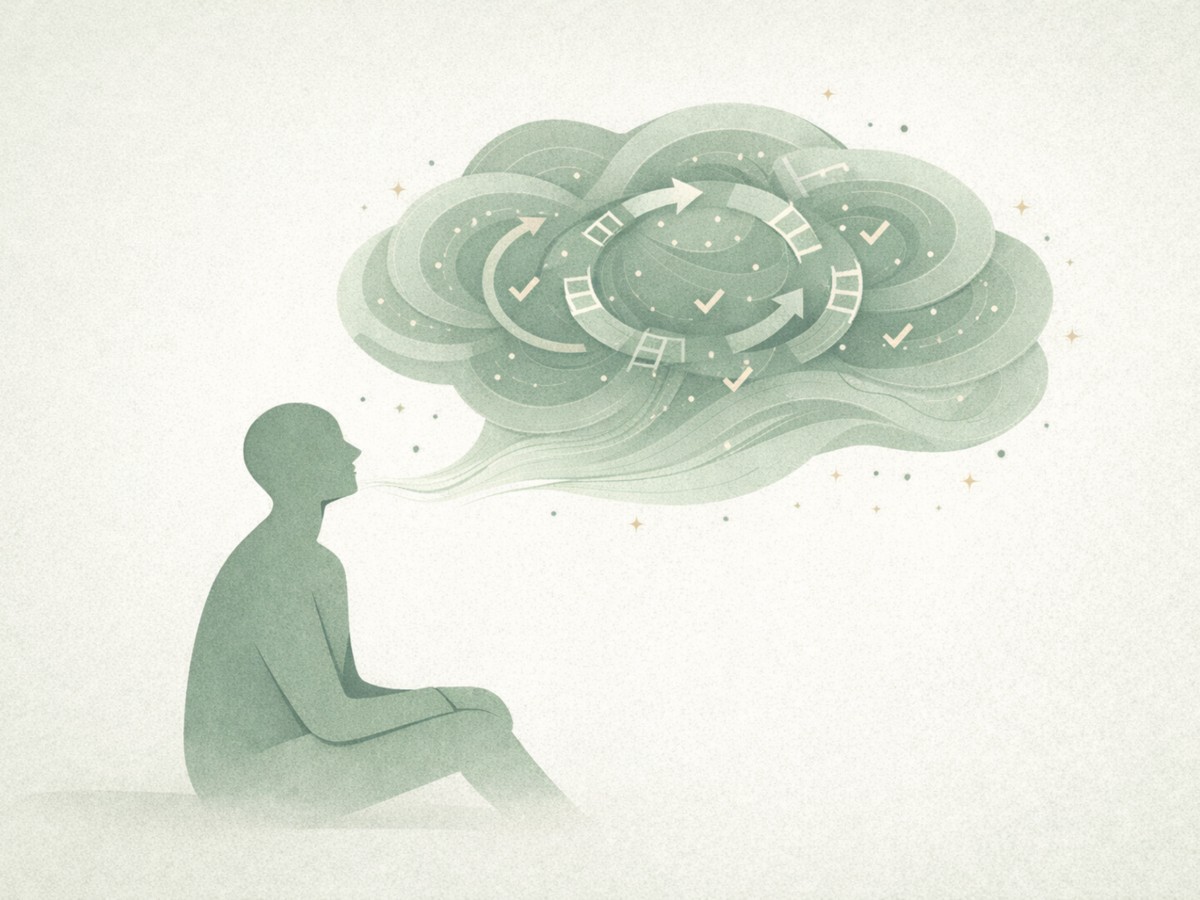
The most common pattern in exhaustion is the Achiever-Perfectionist cluster: the part that keeps productivity high enough not to feel what might be lurking underneath, combined with a bar always just out of reach — so that stopping simply isn't possible. These aren't character flaws. They're protections, typically developed in contexts where rest genuinely didn't feel safe, or where worth felt conditional on output.
Alongside these, many people carry a monitoring part — sometimes called a Pleaser or Vigilant Watcher — that tracks other people's emotional states in real time, adjusting behaviour continuously to prevent conflict or withdrawal. Largely invisible, this exhausting work is performed moment-to-moment across every interaction.
The Cost of Running This Hard
The problem is not that these parts exist — it is that they run continuously, often simultaneously, without any mechanism for genuine rest. Even sleep offers only partial relief for many people with heavily active manager parts: the mind begins planning before the alarm goes off, re-runs yesterday's conversations through the night, wakes at 3am with unfinished work.
For a fuller account of how these protective patterns form and what sustains them, How IFS Works: Parts, Protectors, Exiles, and Self-Energy lays out the model's mechanics in detail.
The tiredness that accumulates from this kind of inner operation is real tiredness — the depletion of a system running at high capacity, around the clock, without adequate restoration. It is compounded by the fact that the parts responsible are also the parts most resistant to slowing down, because slowing down, from their perspective, is precisely what allows the danger in.
When the Firefighters Take Over
Manager parts do an impressive job, most of the time. But the system's more vulnerable material — what IFS calls exiles, parts carrying old pain, fear, or shame — will occasionally break through despite the best managerial efforts.
"Despite how hard our managers work to prevent it, the world has a way of triggering our exiles at times, of breaking through what psychotherapy traditionally calls our defenses. Firefighter parts are activated after an exile has been triggered and desperately (and often impulsively) try to douse the flames of emotion, get us higher than the flames with some substance, or find a way to distract us until the fire burns itself out."
— Richard Schwartz, No Bad Parts
When this happens, firefighters react fast. They are not concerned with long-term consequences; they are concerned with immediate relief from an internal experience that has become intolerable.
In the context of exhaustion, firefighter parts are often what make the tiredness feel confusing or paradoxical. The person who collapses into hours of aimless scrolling after a demanding day — not because they want to, but because something in them simply cannot do anything else — is often experiencing a firefighter at work. The system has reached a point where a protector with no interest in moderation takes over.
The Numbing Function of Exhaustion
One of the more counterintuitive features of chronic tiredness is that it can itself function as protection. One way to prevents confronting psychological from surfacing is by staying in a state of low-grade depletion. Fatigue narrows the bandwidth available for feeling. When you are genuinely exhausted, emotional material tends to remain just below the threshold of awareness. You are too tired to feel it — and, in a certain sense, that may be precisely the point.
Rest That Doesn't Restore
This helps explain why rest, for people in this dynamic, so rarely restores them. When the system is using tiredness as containment, rest alone does not address the structural conditions generating the fatigue. You sleep, and wake up tired. You take a break, and come back exhausted. The tiredness is not a deficit to be filled — it is a function being performed. Understanding this changes what "dealing with tiredness" actually means.
What the Tiredness Is Protecting

Behind every overworked manager and every firefighter reaching for relief, there is something being protected. IFS calls these parts "exiles" — inner figures that carry emotional burdens, usually from earlier periods of life, that the system has decided are too painful to allow into full awareness.
"When protectors keep you at least slightly dissociated, numb, or in your head, you never have to feel the exiles' emotions, which means they're less likely to get triggered."
— Richard Schwartz, No Bad Parts
This is what chronic exhaustion often contains. If the managers can keep the person busy enough, the exile material stays below the surface. If the firefighters can produce enough depletion, it doesn't have the energy to rise.
The Exile Beneath the Fatigue
In the context of burnout and chronic fatigue, exiles tends to cluster around a few themes: a deep sense of not being enough — a belief, not necessarily conscious, that something is fundamentally insufficient about the person, usually confirmed by experience rather than invented; grief for a life not yet fully lived, for vitality quietly surrendered to the demands of managing and achieving; and a longing that can barely be named — for rest that is genuine rather than collapse, for connection that doesn't require performance.
These are not abstractions. They are often experienced somatically — as a heaviness in the chest, a pressure behind the sternum, something pressing toward awareness that never quite arrives. The article IFS for Anxiety: How Parts Work Helps You Stop Overthinking explores a closely related dynamic: how protective parts work to prevent the system from feeling what it is most afraid to feel.
The exile is not the enemy. It is a part of the inner system that has been isolated precisely because what it carries was once too much to bear — and never had the opportunity to be met and helped to heal.
What It Looks Like to Begin Working With IFS
Understanding the inner system behind chronic tiredness does not automatically resolve it. But it changes the orientation — from self-management to something closer to inner inquiry.
"As you unburden your exiles, it allows your protectors to transform, and you begin hearing more from those parts of you that aren't so obsessed and driven — the ones who love being truly intimate with others, the ones who want to create art and move your body, the ones who want to play with family and friends, and the ones who just love being in nature. When you're more Self-led, you become a more complete, integrated, and whole person."
— Richard Schwartz, No Bad Parts
The most useful early shift is a change of relationship with the tiredness itself. Rather than treating it as a problem to overcome — something to push through, medicate away, or optimise around — IFS invites a different question: what is this trying to tell me? The tiredness has a function. The overworking has a logic. The parts running both have reasons. Those reasons are worth understanding, not because understanding alone changes everything, but because it opens the door to a different kind of engagement with what is actually happening internally.
Noticing when the tiredness intensifies — after which kinds of interactions, at which points in the day, in proximity to which topics — gives the inner system specificity. Those patterns are information. Approaching the tired part with curiosity rather than frustration ("what are you doing and why?" rather than "why won't you just let me rest?") begins to shift the relational dynamic between you and the part running the exhaustion.
For those newer to IFS, IFS for Daily Life: Becoming More Self-Led offers practical entry points into daily inner awareness — without requiring formal therapeutic practice as a starting point. Deeper work with the exile material beneath chronic exhaustion typically benefits from a trained therapist: not because independent exploration is impossible, but because the protective parts have good reasons for their configuration, and the system needs trust to open.
Try the Burnout Self-Assessment
Burnout Self-Assessment — How Exhausted Is Your System?
If something in this article resonated, the Burnout Self-Assessment offers a structured way to explore which protective patterns are most active in your own system. Rather than measuring clinical severity, the assessment maps your responses onto five recognisable protector profiles from the IFS model — the Driven Achiever, the People-Pleaser, the Numbing Part, the Inner Critic, and Collapse & Withdrawal — each with a curiosity prompt designed to open inquiry rather than close it.
It is a starting point, not a diagnosis. The purpose is to help you get more specific about what your inner system has been doing — and why.
Want to explore this work further?
If the patterns described here feel familiar — the relentless drive, the rest that doesn't restore, the sense of carrying something that never quite lightens — IFS offers a structured and non-pathologising way to begin understanding what is happening internally. A free introductory consultation is available if you want to get a sense of the work before committing to anything.
About the Author
Ben Carey Donaldson is a certified IFS therapist, meditation guide, and group facilitator based in the Fontainebleau–Paris region of France. He works online with English- and French-speaking clients across Europe and internationally, working with high-functioning professionals and expats navigating burnout, chronic exhaustion, and the patterns beneath them. His approach is grounded, non-pathologising, and informed by somatic and contemplative practice.
Frequently Asked Questions
Is chronic tiredness always related to burnout?
Not necessarily. Chronic tiredness has multiple possible contributing factors, including physiological ones. However, when tiredness persists despite adequate rest and standard interventions don't resolve it, the inner system — the sustained effort involved in maintaining protective patterns — is often a significant contributing factor worth exploring.
Can IFS help with burnout?
IFS is well-suited to burnout precisely because it addresses the internal patterns that generate it, rather than just the surface symptoms. The overworking, the difficulty resting, the sense of running on empty — these often reflect how particular protective parts are organised. Working with those parts, and eventually with the exiles they protect, can shift the underlying conditions rather than just the behaviour.
What are "manager parts" in IFS, and what do they have to do with exhaustion?
Manager parts are proactive protectors — parts that work continuously to control behaviour, maintain appearances, and prevent exiles from being triggered. They include patterns like perfectionism, overachievement, people-pleasing, and hypervigilance. Because they operate constantly and without pause, they generate enormous ongoing depletion — the kind of deep tiredness that doesn't respond to ordinary rest.
What is an "exile" in IFS, and how does it connect to tiredness?
Exiles are vulnerable inner parts that carry emotional burdens — pain, grief, shame, or longing — that the system has decided it cannot safely feel. Protective parts work to keep exiles out of awareness. Tiredness is one way the system maintains this containment: depletion narrows the bandwidth available for difficult feelings to surface.
How do I know if my exhaustion is a protective strategy rather than a medical condition?
Medical causes of fatigue should always be explored and ruled out with appropriate professional support. The psychological dimension described in this article is not in opposition to physical causes — the two often coexist. If physical causes have been addressed and tiredness persists, or if the exhaustion carries emotional flatness or disconnection alongside the physical symptoms, the inner system dimension is worth exploring.
Can I begin this work on my own, or do I need a therapist?
Initial awareness — noticing which parts are most active, observing the patterns in how tiredness arises — is accessible independently, and the Burnout Self-Assessment is a concrete starting point. Deeper work with the exile material beneath chronic exhaustion typically benefits from a trained IFS therapist, who can help navigate what the protective parts are guarding and ensure the work proceeds at a pace the system can tolerate.
Related Articles
What Is Internal Family Systems (IFS)? — A Definitive Guide
How IFS Works: Parts, Protectors, Exiles, and Self-Energy
IFS for Anxiety: How Parts Work Helps You Stop Overthinking
IFS for Daily Life: Becoming More Self-Led
References & Further Reading
1. No Bad Parts: Healing Trauma and Restoring Wholeness with the Internal Family Systems Model — Richard Schwartz (2021)
2. Internal Family Systems Therapy — Richard Schwartz & Martha Sweezy (2nd ed., 2019)
3. Internal Family Systems Workbook — Richard Schwartz (2023)