

by Ben Donaldson, certified IFS Therapist
(estimated reading time: 10 minutes)
There is a particular kind of loneliness that is hard to explain: not the loneliness of being literally alone, but of being in a room full of people and feeling utterly unreachable. You want connection. You can see it just across the table. And yet something in you keeps pulling back.
Loneliness and social isolation are among the most common — and least examined — forms of psychological pain. They are consistently linked to poor mental and physical health outcomes, yet the conventional framing tends to treat them as problems to be solved through behaviour change: get out more, join a group, make the first move. What this overlooks is that for many people, the difficulty is not lack of opportunity. It is that some part of them is actively — if unconsciously — keeping connection at a distance.
Internal Family Systems (IFS) offers a lens for understanding this dynamic that goes beyond behavioural prescription. Rather than treating isolation as a failure or a symptom to be managed, IFS asks: what protective logic is at work here? What parts are running the pattern — and what are they actually trying to do? This article explores those questions in depth.
Why Loneliness Persists Even When We Want Connection
Most conversations about loneliness focus on circumstance: not having enough friends, living in a new city, spending too many hours working alone. These are real factors. But they do not explain why some people can be objectively well-connected — good relationships, active social lives — and still feel chronically isolated from others. Nor do they explain why the advice to simply put yourself out there tends to produce so little lasting change.
The gap between wanting connection and being able to receive it is, in IFS terms, a gap between what the person consciously wants and what their inner system is currently willing to allow.

The Difference Between Loneliness and Solitude
It is worth distinguishing between two things that often get conflated. Solitude is a circumstantial state: you are physically by yourself. It can be chosen, comfortable, even restorative. Loneliness is something different. It is the experience of separation — a felt sense of being cut off from others, unrecognised, or unable to make genuine contact even when people are present.
People can feel deeply lonely in long-term relationships, in workplaces, in families. They can feel it while being perfectly capable of performing the social scripts — making conversation, attending events, appearing engaged. The loneliness is not on the surface. It is in the space between what is being shown and what is actually felt.
This distinction matters because it reframes the problem. If loneliness were simply about insufficient contact, more contact would fix it. When it persists despite contact, something else is happening. Understanding how IFS works — particularly the role of protectors in managing the presentation of self — goes a long way toward explaining what that something else is.
When the System Treats Connection as Dangerous
In IFS, every persistent pattern of behaviour or inner experience has a protective logic behind it. No part of the system does something without a reason — even if that reason is buried, outdated, or no longer accurate in the current context.
For many people who experience chronic loneliness, the inner system has developed a set of conclusions about what connection actually means. Connection might mean rejection. Or exposure — being seen in ways that have historically led to shame. Or loss: a part that learned, early on, that people who get close eventually leave.
The system does not reason its way out of these conclusions by hearing that things are different now. It continues operating from the same protective logic until something shifts at a deeper level — until the exiles carrying those old experiences are met, witnessed, and given a chance to update.
The Parts Behind the Distance
IFS describes the protective layer of the system in terms of two broad categories: managers and firefighters. Both are forms of protector — parts working to prevent emotional pain — but they operate in different ways and at different points in time. Understanding which kind of protector is active in a person's relational patterns is often the first step toward working with them.
"Your protectors' goals for your life revolve around keeping you away from all that pain, shame, loneliness, and fear, and they use a wide array of tools to meet those goals — achievements, substances, food..."
— Richard Schwartz, No Bad Parts
The range of those tools is worth noticing. Protectors keeping loneliness at bay might use high achievement to fill the space where connection would be. They might use intellectual distance, humour, or a carefully maintained persona that prevents anyone from getting too close. The tools are varied; the underlying goal is consistent.
Managers Who Keep Others at Arm's Length
Manager parts are proactive. They work in advance of a threat, setting up conditions that prevent the exile from being triggered in the first place. In relational contexts, this often looks like carefully controlled self-presentation: showing just enough to seem engaged while making sure nothing too revealing slips through.
Some common manager strategies in the context of loneliness and isolation include:
- Pre-emptive self-sufficiency — communicating through posture and behaviour that you do not need anything from others, and therefore cannot be disappointed.
- Social perfectionism — setting implicit standards for friendship or intimacy so high that few people qualify, which effectively prevents the vulnerability of actually trying.
- Hyper-independence — making decisions without consulting others, not asking for help, functioning entirely alone as a point of pride.
- Performing wellness — appearing fine in social contexts even when not, so that no one ever sees anything that might require a deeper response.
None of these patterns are character flaws. Each makes sense as a protective response to something the system learned. The manager part running the strategy does not believe it is creating loneliness — it believes it is preventing pain. The loneliness is a byproduct, not the intention.
Firefighters Who Disrupt or Withdraw
Where managers work to prevent the exile from being activated, firefighters respond after the fact — when something has already broken through and the system is flooded. In relational terms, this often looks like sudden withdrawal, reactive distancing, or behaviours that disrupt connection just as it is becoming real.
Someone might find that the closer a relationship gets, the more they start to pull away — cancelling plans, becoming critical of the other person, engineering distance. From the outside this can look like ambivalence or inconsistency. From an IFS perspective, a firefighter is responding to the anxiety of intimacy by creating the familiar safety of distance.
Firefighter strategies in isolation patterns might also include: overuse of substances or screens to numb the ache of loneliness rather than moving toward connection; shutting down emotionally during conflict; or disappearing from social environments when an interaction starts to feel too exposing.
Exiles and the Fear of Being Seen
Behind every protective structure in IFS is an exile: a part carrying emotional burdens — shame, fear, grief, the memory of specific experiences — that the system has learned to keep locked away. In the context of loneliness, exiles typically carry something like: I am too much. I am not enough. If they really saw me, they would leave.
"Once you have a lot of exiles, you feel far more delicate and the world seems more dangerous because there are so many things and people and situations that could trigger them."
— Richard Schwartz, No Bad Parts
This is the lived reality of someone with significant exile burden in the relational domain. The world — other people, social situations, the prospect of deeper intimacy — starts to feel like a minefield. Not because the person is fragile in some constitutional sense, but because there is so much in the system that is still unprocessed and raw. The protectors respond proportionally: the more vulnerable the exile material, the more vigilant and restrictive the protection.
The Exile Beneath the Wall
It can be tempting to focus all the attention on the protectors — trying to understand them, negotiate with them, or work around them — without pausing to consider what they are actually protecting. But the exile is the source. The wall exists because of what it is keeping safe.
What the Exile Carries
In IFS, exiles carry burdens: emotional loads taken on in response to experience — often in childhood or adolescence, though not always. A child who was persistently overlooked in a family that valued performance might carry a burden of invisibility: a deep belief that they are only worth noticing when they are producing something. A young person who experienced social exclusion might carry a burden of contamination: a sense that something about them is fundamentally wrong, and that closeness with others will inevitably expose it.
These are not conscious beliefs in the way that opinions are conscious. They are felt truths — embedded in the body, in the way a person holds themselves in rooms, in the automatic interpretation they make of ambiguous social signals. The exile does not reason its way to these conclusions; it experienced them in a context where they made complete sense, and the system registered them as fact.
The article What Is Internal Family Systems? — A Definitive Guide explains in more depth how burdens form and how the IFS model understands their relationship to the presenting patterns that bring people into therapy.
Why Protectors Cannot Simply Stand Down
One of the most important insights in IFS is that you cannot simply decide to stop being guarded. The protective system does not respond to reasoning or willpower because it is not operating from a reasoning, willpower-based part of the mind. It is operating from a part that genuinely believes the exile's safety depends on its vigilance.
"When we have lots of exiles, our protectors have no choice but to be egotistic, hedonistic, or dissociative."
— Richard Schwartz, No Bad Parts
This is not a moral failing of the system — it is a structural reality. The protectors are doing exactly what they evolved to do. The problem is not that they are too strong or too dominant; the problem is that they are still responding to a danger that may no longer be present in the same form, and doing so on behalf of an exile who has never had a chance to heal.
This is why approaches that focus only on the surface behaviour — just be more vulnerable, just take social risks — tend not to produce lasting change. The protector has not been consulted. The exile has not been helped. The structural conditions that generate the isolation remain fully intact.
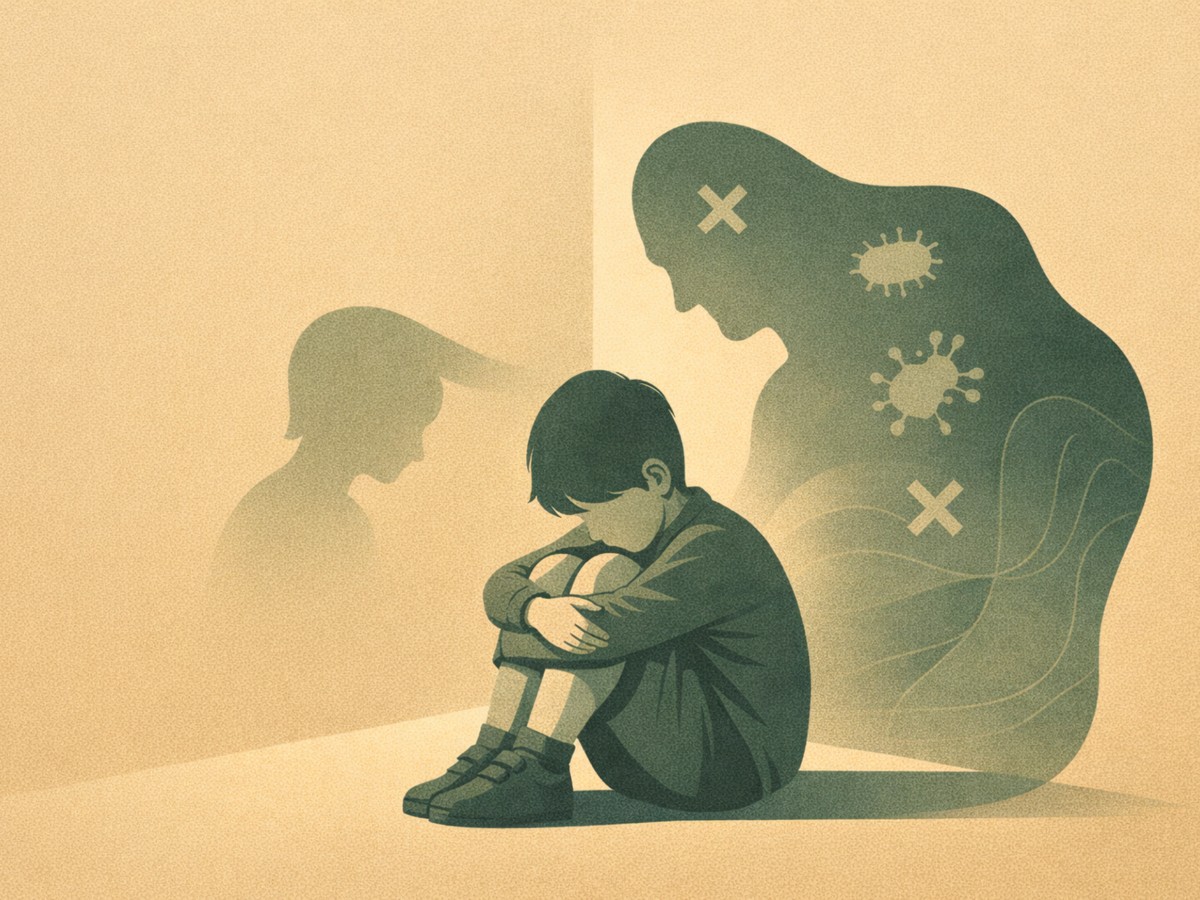
Attachment Style as Inner Landscape
Attachment theory and IFS occupy distinct conceptual territories, but they describe overlapping ground. Attachment theory maps the relational patterns learned in early caregiving relationships — the strategies people develop to maintain proximity to caregivers under varying degrees of availability and safety. IFS maps the internal system that carries those learned strategies forward into adult life.
"IFS can be seen as attachment theory taken inside."
— Richard Schwartz, No Bad Parts
This framing is illuminating. The insecure attachment strategies — avoidant, anxious, disorganised — are not flaws in the person's personality. They are relational templates carried by parts, developed at a time when they represented the most adaptive available response to an inconsistent or unsafe caregiving environment. The avoidant person did not decide to become self-sufficient; a part of them learned that seeking connection led to disappointment, and built a strategy around that learning. The anxious person did not choose hypervigilance; a part learned that connection was only intermittently available, and adapted accordingly.
Understanding your relational patterns through an IFS lens means asking not just what style you have, but which parts are running it — and what those parts are carrying. If you are curious about your own attachment patterns and how they show up in your inner system, the Attachment Style Self-Assessment — An IFS-Informed Reflection offers a concrete place to begin that exploration.
What It Looks Like to Begin Working With These Parts
The IFS approach to loneliness does not bypass the protectors or try to override them. It starts by turning toward them — with curiosity rather than frustration, and with the Self's genuine interest in understanding what they are doing and why. This is a different orientation than most people bring to parts of themselves that are causing problems. The natural impulse is to want rid of them. IFS asks instead: what are they protecting, and how long have they been doing this?
A person might notice, in the context of a new friendship or professional relationship, a familiar tightening — a part moving to establish distance before real contact can happen. Rather than overriding the movement, the IFS invitation is to get curious: what is this part worried about? What does it believe will happen if it lets its guard down? How long has it been carrying this responsibility?
These questions are not rhetorical. The answers that emerge — sometimes in words, sometimes as images, sometimes as bodily sensations — reveal the specific logic of the protective system. And that logic, once witnessed with genuine curiosity from Self-energy, tends to begin loosening. Protectors do not need to be fought; they need to know that the Self can handle what they have been protecting against.
For people unfamiliar with what this work actually looks like in a session, What an IFS Session Looks Like — A Walkthrough for First-Time Clients walks through the process in concrete terms.
From Understanding to Unburdening
When protectors develop enough trust in the Self, they gradually allow access to the exiles they have been guarding. This is where deeper transformation becomes possible. The exile — the part carrying the core belief that connection is dangerous, that being seen leads to rejection, that there is something fundamentally wrong with the person — can finally be met.
In IFS, this meeting is not a rationalisation. You do not convince the exile that its beliefs were wrong. You witness what the exile went through — often through re-accessing the original experiences, from the vantage point of the adult Self who can now be present with it — and the exile is given what it needed and never received: to be seen, accompanied, and ultimately freed from the burden it has been carrying.
"As you unburden your exiles, it allows your protectors to transform, and you begin hearing more from those parts of you that aren't so obsessed and driven — the ones who love being truly intimate with others... When you're more Self-led, you become a more complete, integrated, and whole person."
— Richard Schwartz, No Bad Parts
This is what healing looks like in IFS: not the erasure of difficult parts, but their transformation. When the exile no longer carries its burden, the protectors no longer need to work so hard. The system can afford to be more open — not because the person has learned better social skills or pushed themselves to be more vulnerable, but because the inner conditions that made isolation necessary have genuinely changed.
The article IFS for Daily Life: Becoming More Self-Led explores what this kind of inner shift looks like in practice — the gradual emergence of Self-leadership not as a therapeutic achievement but as an increasingly available quality of presence in ordinary life.
Explore Your Attachment Patterns
Attachment Style Self-Assessment — An IFS-Informed Reflection
Loneliness and relational distance often trace back to specific attachment patterns learned early in life. This self-assessment is designed to help you explore your own patterns — not to assign you a category, but to help you get curious about the parts that may be shaping how you approach connection. It draws on both attachment theory and IFS to offer a reflective starting point for inner work.
Want to explore this work further?
If something in this article resonated — the patterns around distance, the sense of a part holding connection at bay — IFS offers a structured, compassionate way to understand and begin shifting those dynamics. A free introductory consultation is available if you would like to get a feel for the work before committing to anything.
About the Author
Ben Carey Donaldson is a certified IFS therapist, meditation guide, and group facilitator based in the Fontainebleau–Paris region of France. He works online with English- and French-speaking clients across Europe and internationally, including expats and international professionals navigating loneliness, identity questions, and the challenge of building connection across cultures. His approach is grounded, non-pathologising, and informed by somatic and contemplative practice.
Frequently Asked Questions
Why do I feel lonely even when I'm around people?
Loneliness that persists despite social contact often reflects an inner dynamic rather than a circumstantial one. In IFS terms, protective parts may be managing how much of you is actually present in interactions — keeping you behind a carefully controlled presentation that prevents real contact. The loneliness is not the goal of these parts; it is the byproduct of their protection.
What causes people to push others away even when they want connection?
In IFS, this pattern typically reflects protective parts — managers or firefighters — working to prevent an exile from being triggered. The exile usually carries burdens around rejection, shame, or loss learned from earlier relational experiences. The protector's strategy of distance is not irrational; it reflects a genuine assessment of what happened when connection was attempted before.
How does IFS explain the link between attachment style and loneliness?
Richard Schwartz has described IFS as attachment theory taken inside. Attachment patterns — avoidant, anxious, disorganised — are understood in IFS as relational templates carried by parts, developed in response to early caregiving environments. Loneliness and relational distance are often expressions of these templates operating from protective parts that have not yet had an opportunity to update.
Can IFS help with chronic loneliness?
IFS can be particularly useful for loneliness that persists despite external opportunities for connection, because it addresses the inner structural conditions — rather than only the behaviour — that maintain isolation. Working with the protective parts and the exiles they guard can shift the underlying system in ways that make genuine connection more available over time.
What is an exile in IFS, and how does it relate to social isolation?
Exiles are parts in IFS that carry emotional burdens — shame, fear, grief — often formed in response to painful relational experiences. In the context of social isolation, exiles typically carry beliefs such as "I am too much," "I am not enough," or "if they saw the real me, they would leave." Protector parts maintain isolation as a strategy to prevent these exiles from being triggered or exposed.
How does IFS work differently from simply telling someone to be more vulnerable or social?
Behavioural approaches to loneliness focus on action — join a group, take social risks, push through discomfort. IFS focuses on the inner structural conditions that make those actions feel impossible or unsustainable. By working with the protectors maintaining distance, and then with the exiles carrying the original wounds, the system itself changes — so that connection becomes genuinely possible, not just behaviourally performed.
Related Articles
What Is Internal Family Systems (IFS)? — A Definitive Guide
How IFS Works: Parts, Protectors, Exiles, and Self-Energy
What an IFS Session Looks Like — A Walkthrough for First-Time Clients
IFS for Daily Life: Becoming More Self-Led
References & Further Reading
1. No Bad Parts: Healing Trauma and Restoring Wholeness with the Internal Family Systems Model — Richard Schwartz (2021)
2. Internal Family Systems Therapy — Richard Schwartz & Martha Sweezy (2nd ed., 2019)
3. Attached: The New Science of Adult Attachment and How It Can Help You Find — and Keep — Love — Amir Levine & Rachel Heller (2010)
4. The Body Keeps the Score: Brain, Mind, and Body in the Healing of Trauma — Bessel van der Kolk (2014)