
(estimated reading time: 9 minutes)
Anger has a reputation problem. It gets treated as evidence of something gone wrong: poor impulse control, emotional immaturity, a character flaw that needs to be managed, suppressed, or trained out of existence. Most approaches to anger focus on reducing it: breathing exercises, timeout strategies, anger management programmes that treat the response as the problem.
What they miss is the logic inside it.
Internal Family Systems offers a different starting point. Anger, in IFS, is not a disorder. Like every protective response, it developed in response to something real. Understanding what that original cause is, and what the anger is working to protect, becomes the key to transforming your relationship to this challenging emotion.
Why Anger Is a Protector, Not a Problem
Every part of your inner system of emotions has a role. The parts that carry pain like fear, grief, or shame are what IFS calls exiles: vulnerable aspects of experience that have been pushed out of awareness because they are too painful to confront directly. The parts of you that manage the day to day, and prevent those exiles from being triggered, are protectors.
In IFS, anger is most often a protector.
It may be assertiveness, sharp speech, or a commanding presence to keep threats at bay before they become overwhelming. Or it may come on fast, bypassing decision-making, to extinguish what feels like an emergency. In either case, the anger is not arriving randomly. It is responding to something that feels like threat.
"Once you have a lot of exiles, you feel far more delicate and the world seems more dangerous because there are so many things and people and situations that could trigger them."
— Richard Schwartz, No Bad Parts
The practical implication: trying to remove or suppress the anger without understanding what it is guarding will not produce lasting change. It will produce, at best, temporary management, and often an escalation, because the system has lost a protective mechanism without the underlying need being addressed.
Faces of Anger
Not all anger looks the same. The same protective strategy can express itself in different ways depending on many factors.
Rage, fast, intense, often overwhelming, arrives before thought, bypassing the evaluative mind entirely. It possesses you: you don't choose it, it just arrives. Something vulnerable inside you is at serious risk of being exposed. The intensity of the anger is proportional to the depth of what is being protected.
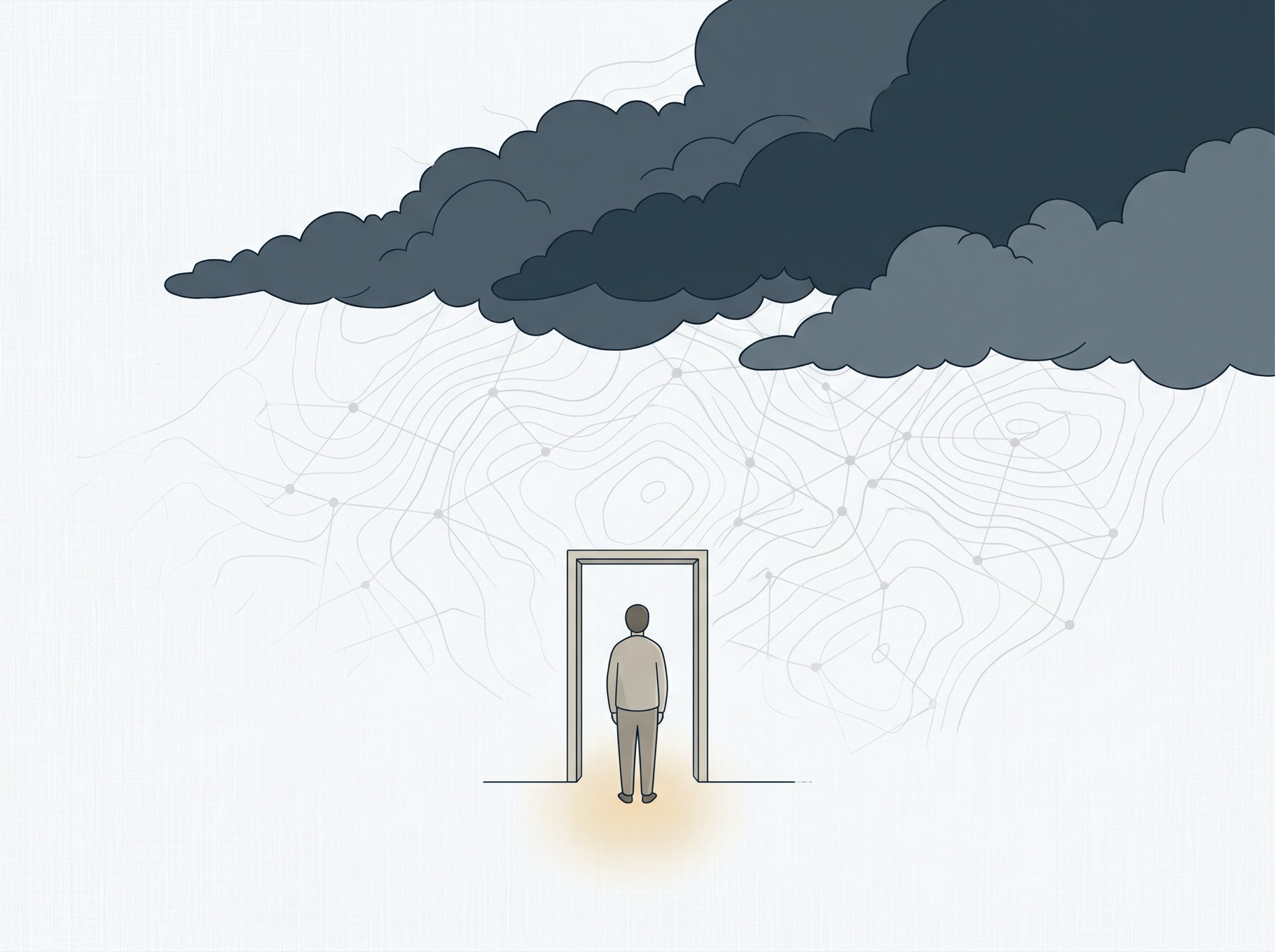
Irritation is the low-grade, chronic form, the background hum of frustration that sits just below the surface and emerges at minor provocations. This is the part working continuously to monitor the environment for threats, keeping the system in a state of alert, vigilant for everyday friction because the real problem underneath is never addressed.
"We are dominated—individually and collectively—by hardline, punitive parts who believe that people (and their parts) are basically bad and need to be warred against. If you believe that within you are dangerous, bestial, or sinful impulses that need to be constantly monitored, controlled, and, if necessary, battled against ... then it makes sense that you would see other people that way, and your approach to social problems will invariably involve controlling tactics and war."
— Richard Schwartz, No Bad Parts
This matters especially for men, where social conditioning has typically encouraged the expression of anger over the expression of fear, grief, or vulnerability. What presents as a man's anger problem is often, in fact, a system that learned very early that strength was acceptable and softness was not.
What Angry Parts Are Usually Protecting
Something has usually been exiled beneath the anger. The nature of that exile varies, but certain patterns appear consistently.
Humiliation. The exile carries the memory of being publicly shamed, dismissed, or made to feel small. The anger protector activates whenever the system perceives a similar threat — a critical comment, a dismissive tone, being talked over or ignored. The rage or irritation is not about the current moment. It is about the original wound.
Powerlessness. Exiles that carry the experience of having had no agency, no voice, no capacity to change what was happening. This can go back to childhood, to a context where adult authority was overwhelming, generating anger protectors that are hypersensitive to any sense of being controlled, overridden, or not consulted. The anger is not stubbornness. It is the system's insistence that powerlessness will never happen again.
Fear. This is the most commonly misread configuration. The presenting emotion is anger — assertive, defensive, sometimes aggressive. The underlying state is fear. Many people who seem angry are frightened, and the anger part has learned to lead because fear was not safe, or not effective, or produced outcomes worse than the anger did. The relationship between IFS and the brain's threat-detection systems explains much of why this conversion happens automatically and outside conscious choice.
Grief and loss. An exile carrying unprocessed grief, longing, or the pain of chronic disconnection. The anger part activates to prevent that pain from being felt because grief, unlike anger, feels passive, and passivity feels weak.
Shame-carrying exiles generate both critic parts and anger parts, sometimes in the same person. The critic turns inward; the anger turns outward. Both are protecting the same underlying material.
Why Standard Anger Management Often Falls Short
Traditional anger management approaches like breathing techniques, cognitive reframing, and impulse delay can interrupt the response long enough to prevent damage. But they address the anger as though it were the origin rather than the message.
Suppressing or redirecting the anger without engaging what it protects leaves the exile in the same position. The strategy changes; the underlying structure does not.
This is also why insight alone so rarely shifts chronic anger. A person can understand, intellectually, that their rage is connected to childhood humiliation. They can have this understanding for years. But understanding and meeting are different things. The exile does not need to be explained. It needs to be witnessed, approached with compassion, and offered something it never received.
Anyone who has ever tried to reason their way out of a pattern that keeps returning, whether it be anger, or something else like the anxiety loops and overthinking that often accompany it, understands that knowing what is happening is not the same as changing the conditions that generate it.
Working With Anger Parts Through IFS
The IFS approach to anger begins not with reduction but with relationship. The first move is toward the anger rather than away from it.
Noticing without merging. The first step is creating enough internal distance to observe the anger rather than becoming it. "There is a part of me that is furious right now" is a different state than "I am furious." The shift is small in language, but significant in its effect. It is the beginning of separating slightly from the activated part so that something other than the part's perspective can be present.
Getting curious. From that slightly separated position, genuine curiosity becomes possible. Not interrogation, not suppression: curiosity. What is this part doing? What does it believe is at stake? When did it first learn to respond this way? The questions are not rhetorical. They are directed toward an actual figure in the internal landscape that has its own perspective and its own history.
"For example, a part who is angry can also feel hurt or scared. If we just see it as the ‘angry part,’ we are likely to ignore its other feelings."
— Richard Schwartz, Internal Family Systems Therapy
Gaining the protector's trust. Anger parts, in particular, are often deeply suspicious of therapeutic approaches. They have been the target of correction for so long that they expect more of the same. Genuine curiosity tends to produce a different response. The part begins to sense that it is being taken seriously rather than being managed.
Moving toward the exile. When the anger part develops enough trust to allow it, the deeper work becomes possible: moving toward the exile that the anger has been protecting. This is where lasting change originates. When the exile's pain is genuinely met, witnessed, acknowledged, and offered what it needed, the anger discovers that it no longer needs to work at the same intensity.
How this process unfolds in practice is explored more fully in how IFS works as a model.
Anger, the Body, and the Nervous System
Anger is not only a psychological event. It is a physiological one: a state of activation in the nervous system that involves hormonal shifts, muscular tension, cardiovascular change, and altered cognitive processing. The body is not a passive vehicle for the emotion; it is part of how the emotion operates.
This has practical consequences for IFS work. When an anger part is highly activated, the conditions for reflective self-access are compromised. The nervous system in a state of high arousal does not easily support the curiosity, spaciousness, or Self-energy that IFS work requires. The body needs to come down before the inner work can proceed.
Thus, working with angry parts often involves a somatic dimension: supporting the body's capacity to regulate in order to make the deeper psychological work accessible.
For people experiencing anger alongside depression or emotional numbness, the relationship between activation and shutdown is worth exploring. These are not opposites in IFS terms. They are often the same system oscillating between two different protective responses — one that mobilises, one that collapses — depending on which feels safer in the moment.
Research on emotion regulation has linked habitual suppression of feelings with poorer emotional wellbeing and less close relationships than reappraisal, which means changing how a situation is understood.[1] That is consistent with the IFS view that protection relaxes not when it is forced to, but when the underlying conditions change.
Map Your Own Stress Responses
If this article has surfaced something recognisable, the Emotional Dysregulation Self-Assessment offers a structured way to look more closely at your system's patterns.
Emotional Dysregulation Self-Assessment: How Does Your System Respond Under Stress?
A free 6-page IFS-informed self-assessment that maps your stress responses across four patterns: activation and fight, shutdown and freeze, anxiety and flooding, and fawn and compliance. Each pattern is framed as adaptive protection, not pathology. Closes with four response profiles and curiosity prompts.
Working with what the anger is protecting
Understanding what an angry part is guarding is the start of a different relationship with it. If you'd like to explore this with support, IFS therapy offers a structured, compassionate way to work with the parts behind the anger. A free introduction call is a good place to start.
Frequently Asked Questions
Is anger always a protector in IFS?
In IFS, anger is treated as a part with a protective role rather than as a free-standing emotion. Whether it presents as a manager or a firefighter, its function is protective. That doesn't mean it can't cause harm — it can — but understanding the job it is doing changes what kind of intervention is actually useful.
What is the difference between healthy anger and problematic anger?
IFS doesn't categorise emotions as inherently healthy or unhealthy. What matters is the degree of blending: whether a part is leading the system in a proportionate response to a real situation, or whether it is taking over based on historical pain rather than present reality.
Can IFS help with ADHD and anger?
ADHD can involve difficulty regulating impulses and emotions, and for some people that makes anger arrive faster and feel more intense. IFS is not a treatment for ADHD, and an assessment is a matter for a clinician. It can address the parts that carry the shame and frustration that often build up around ADHD-related experiences, and work with protective parts whose responses are amplified by those burdens.
Why does my anger get worse when things are going well?
For some people, success brings visibility, and visibility can bring the risk of an exile being triggered. From an IFS perspective, the anger protector may then activate even when the surface situation is positive. It is not perversity. It may be the system responding to a perceived risk beneath conscious awareness.
How long does it take to work with anger in IFS?
Some people notice meaningful shifts relatively early — not because the exile has been fully addressed, but because the protector begins to trust that a different approach is possible. Deeper transformation, where the exile's burden is genuinely released, tends to take longer and benefits from sustained therapeutic support.
Is it possible to work with anger-related patterns independently?
Initial awareness work — noticing the anger as a part, approaching it with curiosity rather than judgment, beginning to understand its protective logic — is accessible outside of therapy. The Emotional Dysregulation Self-Assessment offers a structured entry point. Working with the deeper exile material typically benefits from the support of a trained IFS practitioner.
References
1. Gross, J. J., & John, O. P. (2003). Individual differences in two emotion regulation processes: Implications for affect, relationships, and well-being. Journal of Personality and Social Psychology, 85(2), 348–362. https://doi.org/10.1037/0022-3514.85.2.348
2. Schwartz, R. C., & Sweezy, M. Internal Family Systems Therapy (2nd ed.). Guilford Press. (Source of the quotation in "Working With Anger Parts Through IFS".)