

By Ben Carey Donaldson, Certified IFS Therapist
(estimated reading time: 9 minutes)
Trauma is one of those words that has a clinical definition and a lived reality that don't always coincide. Clinically, it refers to experiences that outpace the nervous system's capacity to process them — events too overwhelming, too sudden, or too isolating to be fully metabolised as they happen. In practice, it often shows up later, in the responses the body and mind never quite let go of: the alertness that doesn't fully switch off, the difficulty trusting, the way certain moments reach back across time and feel unexpectedly close.
This article looks at how Internal Family Systems (IFS) understands that process — and why its approach to trauma is distinct from how most therapeutic models frame it. Rather than treating trauma responses as symptoms to be managed or overcome, IFS sees them as adaptive: the organised activity of a system that found ways to cope under difficult conditions, and is still running those strategies long after the conditions changed.
What follows explores the IFS understanding of trauma and PTSD: what happens internally when something overwhelming occurs, how the parts that carry it develop and persist, and what it looks like when healing begins — not as the erasure of what happened, but as a shift in the internal relationship to it.
What Trauma Actually Does
Trauma is not just a memory. This is one of the most important things to understand about it — and one of the reasons why talking about what happened, while sometimes helpful, doesn't always produce the relief people hope for.
Trauma interrupts the ordinary processing of experience — the way an event moves through awareness and becomes part of a coherent past. When something happens that is too overwhelming or too frightening to process in real time, parts of the experience become frozen in place, preserved in a kind of urgent, arrested present.
This is why trauma can feel so immediate even years later. The part of you still carrying it has not had the experience of the event ending. It is still responding as though the danger is current — still watching, still bracing, still doing what it learned to do to survive.
Research on trauma and the nervous system has demonstrated that these responses operate beneath the level of conscious choice. When the nervous system detects a cue that resembles the original situation, it activates responses that are automatic and whole-body. The rational, reflective mind is often the last to know.[1]

Not a Wound — A Response That Got Stuck
In IFS, what are called trauma responses — hypervigilance, numbness, excessive reactivity, inability to trust, difficulty resting — are protective strategies organised around the original wound. They are the system doing exactly what a system does: working to prevent the same thing from happening again.
"When you face a particular trauma, your parts mistakenly believe that they need to protect your Self, so they push your Self out of your body — which is why so many trauma survivors describe watching themselves being hurt from outside their bodies."
— Richard Schwartz, No Bad Parts (p. 140)
If trauma is a stuck protective response, then healing means helping the part of you carrying that response to understand that circumstances have changed and that the protection it developed is no longer the only option available.
The Parts That Carry What Happened
In Internal Family Systems, the mind is understood as naturally made up of multiple parts — different aspects of a person's inner life, each with its own perspective, its own emotional range, and its own way of responding to the world. This is not pathology; it is simply how minds work. What trauma does is disrupt the ordinary functioning of this internal system in specific ways.
Protectors and What They're Guarding Against
After something difficult happens, parts of you take on protective roles. Some of these work proactively: they manage, plan, anticipate, keep vigilance high, maintain control over as many variables as possible. They scan for threat before it arrives. They regulate exposure. They make sure you stay functional and, in their view, safe.
Others step in reactively, when the protective system is overwhelmed: they shut down, dissociate, numb, or drive impulsive behaviours that create immediate distance from unbearable feeling.
What both types of protective response share is a purpose. They are not malfunctions. They are strategies developed under difficult conditions, often very early in life, to manage pain that had nowhere else to go. Understanding them as protectors in an IFS sense means recognising that they developed for good reasons, even when their long-term cost is high.
The Parts Left Behind
The wounded parts of you are what IFS calls exiles. These were the parts present for the difficult experience, that absorbed its emotional impact, and then were pushed out of everyday awareness because the pain they carried was too much to integrate.
"After the trauma or attachment injury, the burdens these parts absorb shift them from their fun, playful states to chronically wounded inner children who are frozen in the past and have the ability to overwhelm us and pull us back into those dreadful scenes."
— Richard Schwartz, No Bad Parts (p. 53)
Exiled parts often carry not just the memory of what happened, but the beliefs that the experience generated — beliefs formed in a moment of overwhelm by a very young, very frightened self: that the world is not safe, that people cannot be trusted, that the pain was somehow their fault, that they are too much or not enough. These beliefs feel like truth rather than interpretations, because the part holding them has never had an opportunity to update them.
The protective system typically works hard to keep these parts out of consciousness because accessing them can feel destabilising. But their influence leaks through anyway: in the dreams that wake someone at 3am, in the shame that floods without warning, in the way certain interactions leave a person feeling years younger and completely without resource.
Why Protective Responses Don't Simply Disappear
A question people often ask is why these patterns persist. The trauma happened years ago. It is over. Why does the nervous system still respond as though it isn't?
The IFS answer is that protective parts are not responding to what happened then. They are responding to what they believe is still possible. Because they were formed under conditions of genuine threat, and because they have been doing their job ever since — without acknowledgement or without evidence that circumstances have changed — they have no reason to stand down.
The more vigorously protective parts work, the less contact the system has with the exiled parts they are protecting, which means those parts never get updated, never get witnessed, never have the experience of the event ending. The protection that was supposed to be temporary becomes permanent. And the internal system organises itself more and more around managing something that can never quite be put down.
This helps explain why insight alone often isn't enough to shift trauma responses. Understanding why you are the way you are doesn't automatically change what the protective parts are doing. They aren't responding to reasoning. They are responding to what they perceive as continuing danger.
How Healing Begins in IFS
IFS doesn't approach trauma by trying to remove or override what the protective system is doing. It approaches it by building a relationship with the parts involved.
This means slowing down enough to actually notice what a protective response feels like from the inside. Where is it in the body? What does it feel like when it's active? What is it afraid would happen if it stopped?
That last question often opens something up. Protective parts are almost always afraid of what is underneath them: the exiled pain they have been working so hard to contain. Their grip loosens not through force but through reassurance: when they begin to trust that what they've been protecting is not going to overwhelm the person completely, that there is now a more resourced capacity to be with it.
This capacity — what IFS calls Self-energy — is the quality of presence that makes it possible to be with difficult inner experience without being consumed by it. It includes things like steadiness, curiosity, and compassion: the ability to be near something painful without either pushing it away or being swallowed by it. The development of this capacity is central to how IFS understands healing from trauma. It is not about becoming invulnerable to what happened. It is about becoming able to accompany the parts carrying it.
What Begins to Shift
When the protective system trusts enough to allow contact with the exiled parts, those parts begin to be witnessed by a Self that can remain present. Something changes in the internal landscape; the quality of the protective response begins to alter.
Hypervigilance may still be there, but it has less urgency. Numbness loosens. Sleep sometimes becomes easier. The sense that the past is perpetually occurring begins to recede. Parts that had been frozen begin to thaw, very gradually, in the presence of consistent, non-catastrophising attention.
This is not the same as the traumatic experience disappearing from memory. What changes is the relationship to the memory and to the parts that have been carrying it. They are no longer running the system from underneath. They become, with time and care, parts that have a different role to play.
For many people, one of the most significant shifts is a return to embodiment — a sense of being present in the body that trauma often disrupts. The connection between the protective system's grip and the difficulty of fully inhabiting physical experience is worth exploring in depth; it is at the heart of why IFS works so well alongside somatic approaches to trauma.
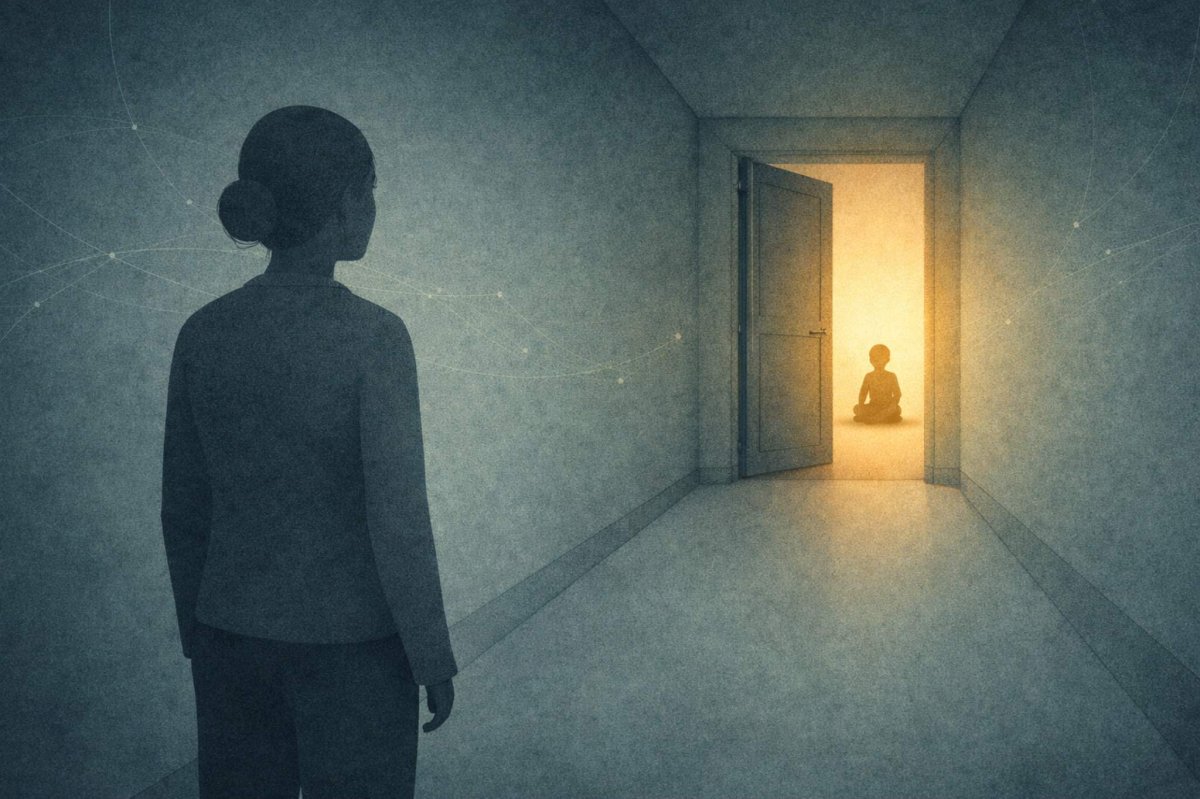
"The burdens you accrue from the trauma seem to be dense energy in this inner world and they take up a lot of space inside, so not only is the Self disembodied but these other kinds of energies make it harder for you to re-embody."
— Richard Schwartz, No Bad Parts (p. 141)
📄 Free Resource: ACEs Self-Assessment
If you want to explore your own early experiences in a structured way, the ACEs Self-Assessment offers a starting point. Based on the validated Adverse Childhood Experiences questionnaire (Felitti et al., 1998; CDC) with IFS-informed interpretive profiles — a place to begin with curiosity, not a score to be defined by.
Download the ACEs Self-Assessment — freeAbout the Author
Ben Carey Donaldson is a certified IFS practitioner, meditation guide, and group facilitator based in the Fontainebleau–Paris region of France. He works online with English- and French-speaking clients across Europe and internationally, supporting people navigating the lasting effects of trauma, early adversity, and the protective patterns that developed around them.
Frequently Asked Questions
What is IFS therapy for trauma?
IFS approaches trauma by working with the parts of the mind that formed in response to difficult experiences. Rather than treating trauma responses as dysfunction, IFS understands them as protective adaptations — and heals them by building a compassionate relationship with the parts carrying the pain, beginning with the protective parts and eventually reaching the exiled parts underneath.
Can IFS help with PTSD?
IFS has been applied to PTSD in both clinical and research settings, with promising outcomes. Its non-pathologising stance — treating trauma responses as adaptive parts rather than symptoms to be eliminated — can make it feel more manageable for people who have found other approaches difficult. IFS is often used alongside somatic approaches and other trauma-informed modalities.
What are 'parts' in relation to trauma?
In IFS, parts are distinct aspects of the internal system — each with its own perspective, emotional range, and way of responding. In relation to trauma, some parts take on protective roles and others carry the painful experiences themselves, often frozen at the age the trauma occurred. IFS works with both, beginning with building trust with the protectors before approaching the exiled parts.
What is the difference between trauma and PTSD?
Trauma refers broadly to overwhelming experiences that the system could not fully process at the time. PTSD is a clinical diagnosis given when trauma responses meet specific criteria around duration, intensity, and functional impact. Not everyone who experiences trauma develops PTSD, but many carry unresolved trauma responses that affect daily life without meeting full diagnostic criteria.
Why do trauma responses persist even when the trauma is over?
In IFS terms, protective parts are not responding to the past — they are responding to what they believe is still possible. Because they were formed under conditions of genuine threat and have continued doing their job since, they have no reason to stand down without something changing in the internal relationship. Insight alone often isn't enough. Healing requires the protective parts to develop trust that the danger is no longer current.
Is the ACEs questionnaire a diagnostic test?
No. The ACEs questionnaire is a research and self-reflection tool, not a clinical diagnostic instrument. It identifies whether specific types of adverse childhood experiences were present before age 18, but does not diagnose any condition or predict individual outcomes. If you are concerned about your mental health, please speak with a qualified professional.
Related Articles
What Is Internal Family Systems (IFS)? — A Definitive Guide
How IFS Works: Parts, Protectors, Exiles, and Self-Energy
IFS vs. Talk Therapy: What Makes Parts-Based Therapy Different?
IFS for the Inner Critic and Shame
References & Further Reading
1. Lanius, R. A., Vermetten, E., & Pain, C. (2010). The Impact of Early Life Trauma on Health and Disease: The Hidden Epidemic. Journal of Nervous and Mental Disease, 198(6), 471. https://doi.org/10.1097/NMD.0b013e31816b7c7b
2. Felitti, V. J., Anda, R. F., et al. (1998). Relationship of childhood abuse and household dysfunction to many of the leading causes of death in adults. American Journal of Preventive Medicine, 14(4), 245–258. https://doi.org/10.1016/S0749-3797(98)00017-8
3. Shadick, N. A., et al. (2013). A randomized controlled trial of an Internal Family Systems-based psychotherapeutic intervention on outcomes in rheumatoid arthritis. Journal of Rheumatology, 40(11), 1831–1841.
Schwartz, R. C. (2021). No Bad Parts: Healing Trauma and Restoring Wholeness with the Internal Family Systems Model. Sounds True.